To get the Zoom link: Please email mmlcoordinators@gmail.com
The coordinators of the lecture for the Singapore Museums will send you the Zoom link and the password.
Continue Reading
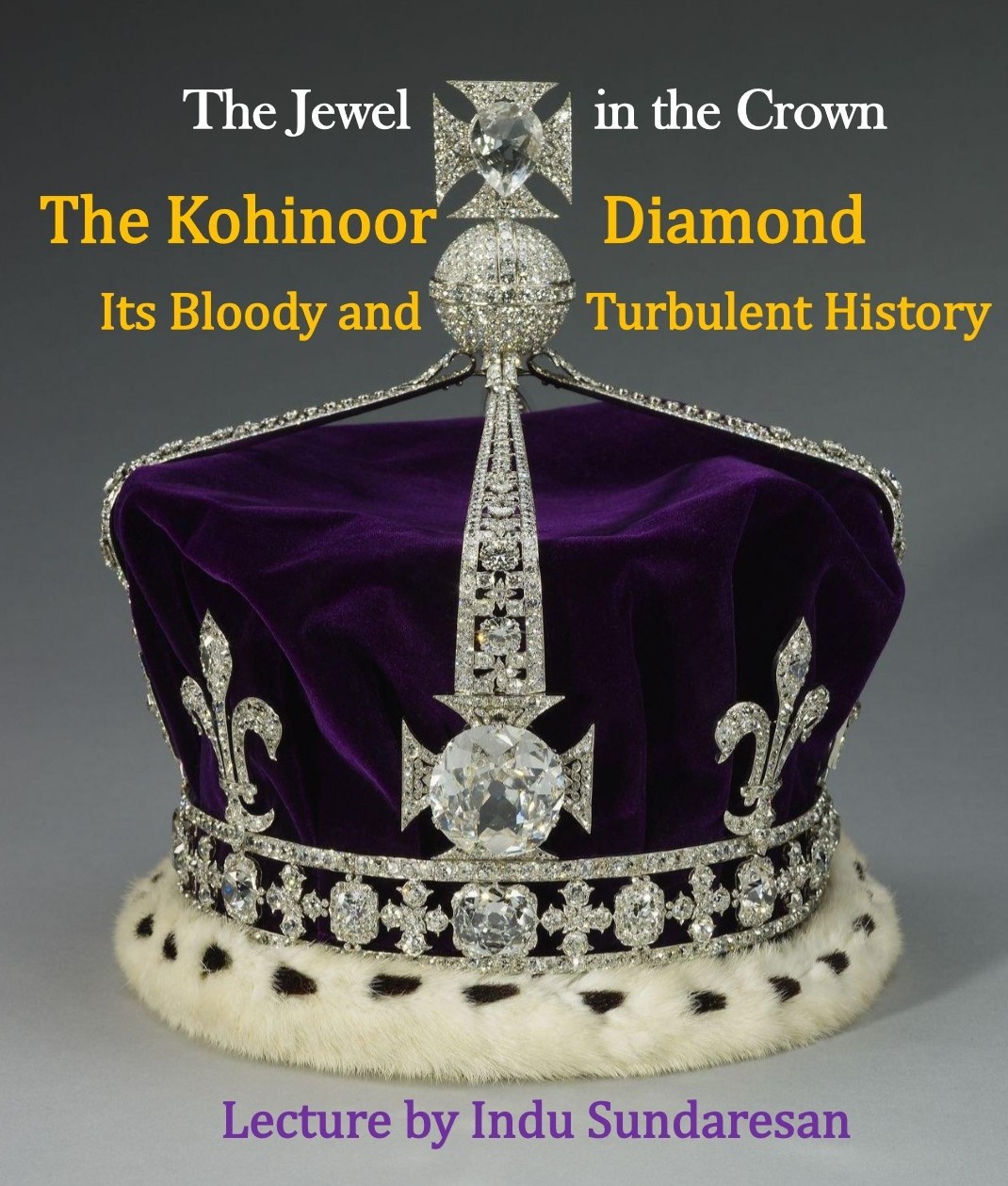
To get the Zoom link: Please email mmlcoordinators@gmail.com
The coordinators of the lecture for the Singapore Museums will send you the Zoom link and the password.
Continue Reading
MEDIUM DAY 2025: FRIDAY, SEPTEMBER 19th
I’m giving a Mughal Empire talk on Medium Day 2025; essentially a mini writing class. I will pull examples from the novels of my Taj Mahal trilogy and show you how I did my research into 17th Century India, how I created a timeline, and whether I chose to follow it or not. And why not.
Continue Reading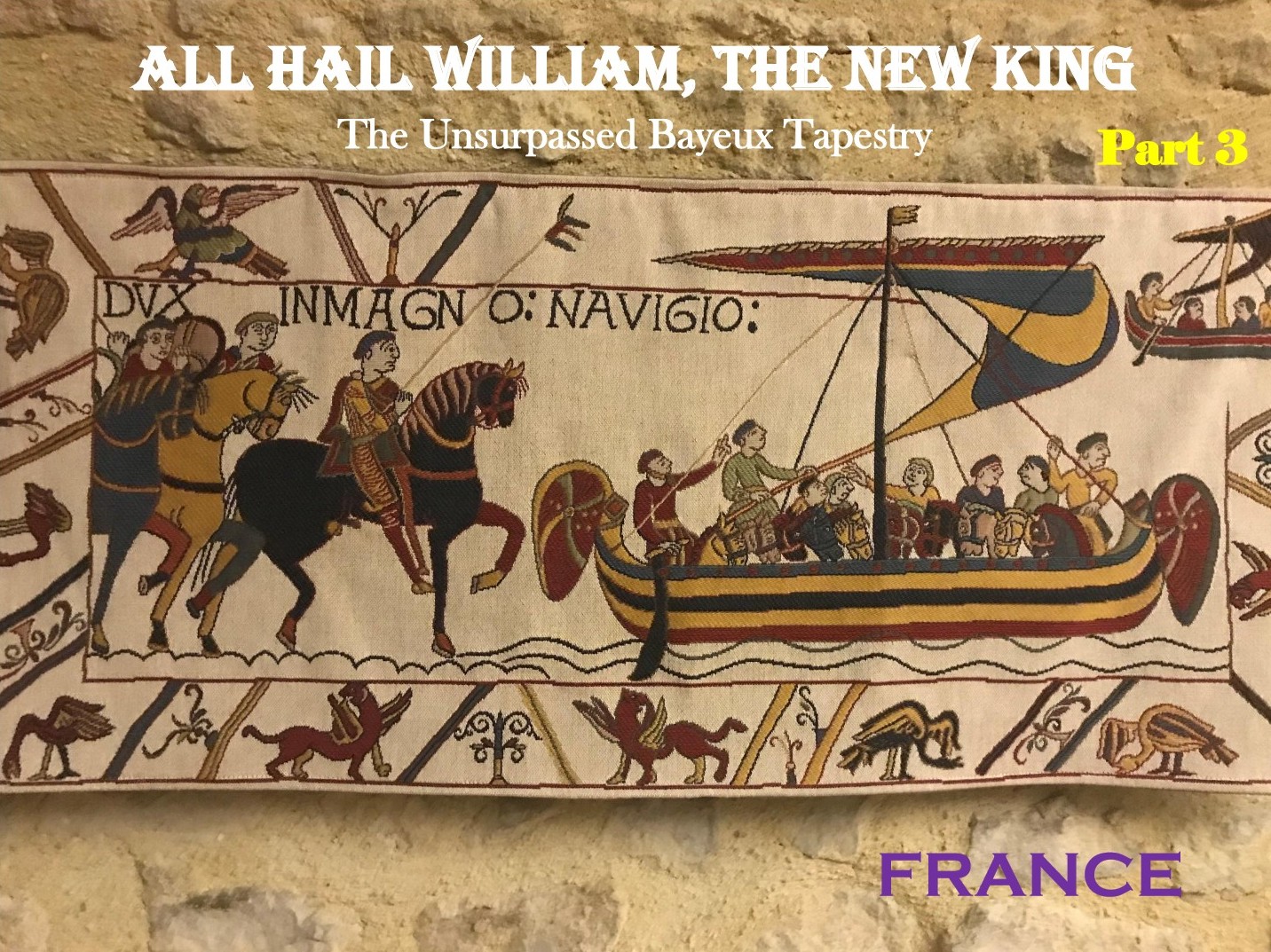
THE BAYEUX TAPESTRY, THE SCENES, EXPLAINED.
When William, the French Duke of Normandy, went across the English Channel in September, 1066 CE, to take England and make it his own, he gave two excuses for this unreasonable aggression.
One, he said that King Edward the Confessor, who was his uncle once removed (see the history in Parts 1 and 2 of this blog post), had, during William’s first and only visit to England some fifteen years earlier, declared that he wanted William to follow him on the throne.

The very first scene of the Bayeux Tapestry—detailing William’s conquest of England—is a meeting, presumably at the Palace of Westminster which was the royal abode then, between Edward the Confessor and his successor, Harold. Harold was Edward’s brother-in-law—Edward had married his sister. Image Source.
Two, William said that the man who donned the crown after Edward the Confessor’s death in January of 1066 and became King Harold, had also promised him (promised William that is) that he would absolutely not take the crown after Edward, and that it would be kept for William.
I can, and will, poke several holes into both these excuses.
Continue Reading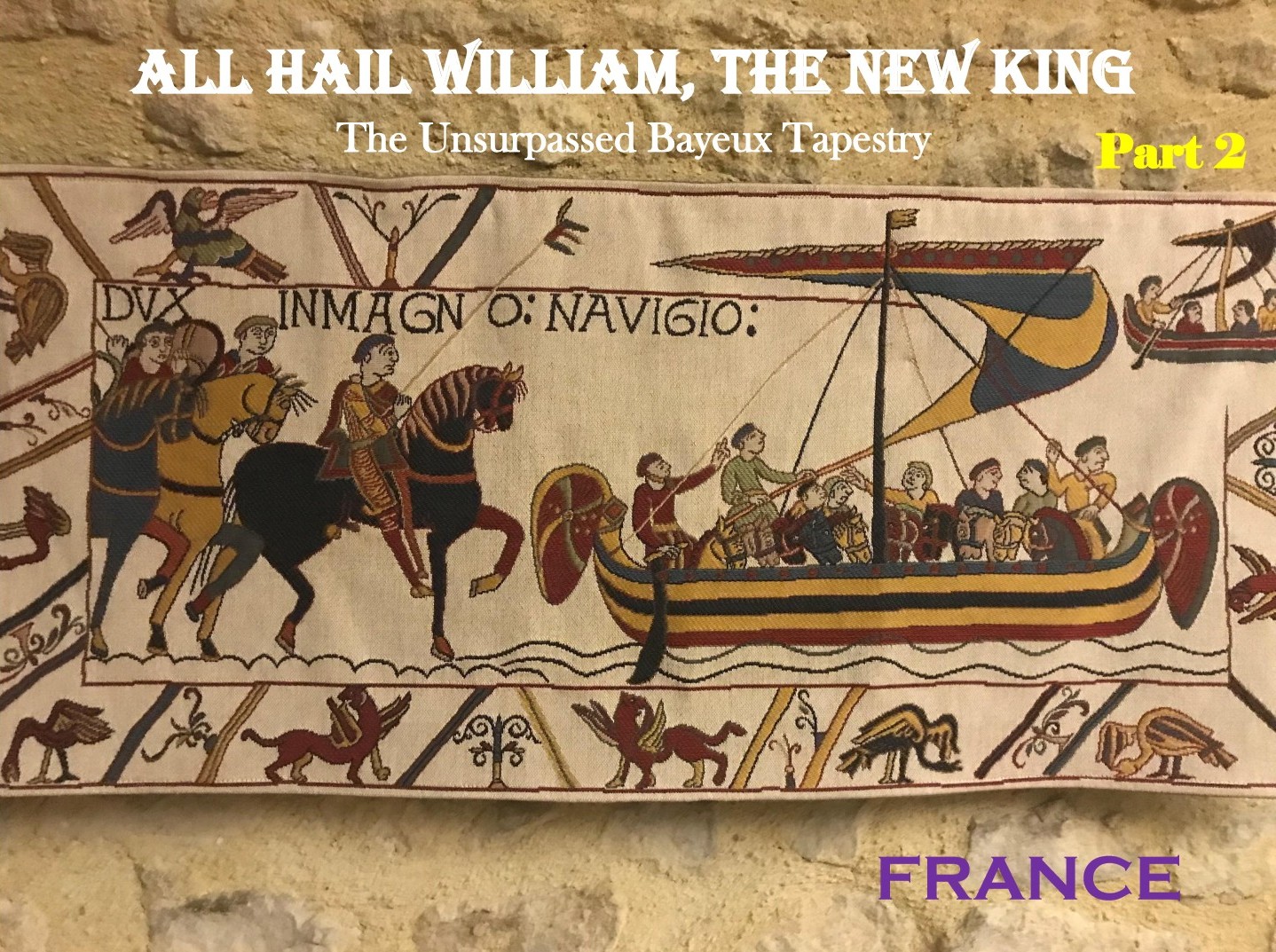
In 1066 CE, a French usurper, William the Conqueror, came to the English throne. He was the Duke of Normandy, and his story was told very soon after The Conquest on a length of embroidered linen, using ten hues of subdued colors. This is the Bayeux Tapestry.
The tapestry was made for the consecration of Bayeux Cathedral—William the Conqueror’s brother, Odo, was Bishop of Bayeux, and responsible of the building of the cathedral (future blog post). At that grand event, the Bayeux Tapestry was displayed for the first time, and for many centuries after, hung in the grand nave.
Continue Reading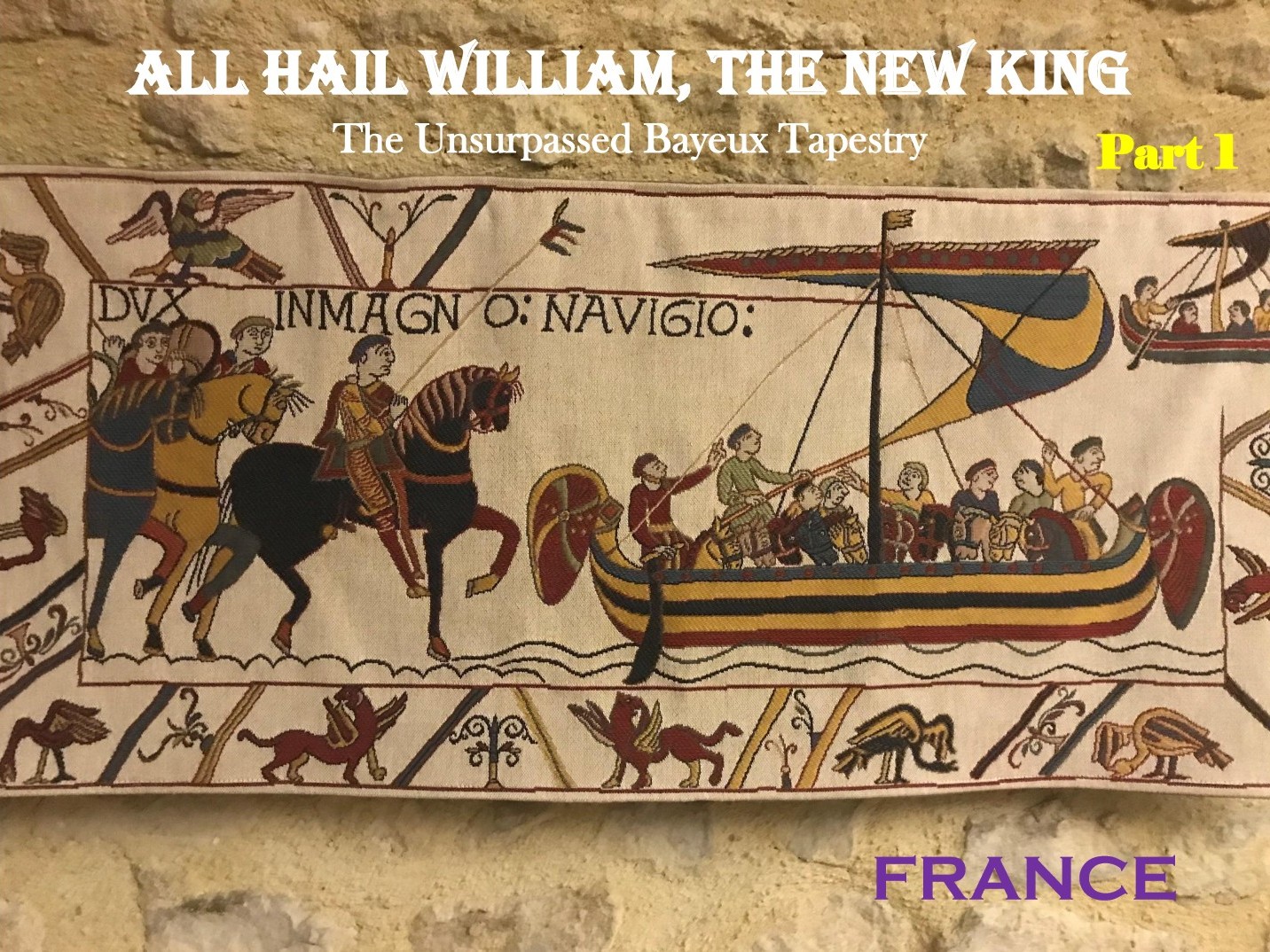
At the end of September, 1066 CE, William, Duke of Normandy, took a boat across the English Channel to land on the coast of Sussex. A little more than a fortnight later, he had defeated the English king, and established himself sovereign in a Norman Conquest.
So complete was William’s victory that the very character of English society altered beyond recognition. Language, law and politics knelt to Norman rule. The English nobility fled the country in large numbers, or died during the invasion, and their daughters, sisters, and wives who inherited their estates, married William’s French nobility. Most of the high offices in the land—both the laity and the clergy, including the Archbishop of Canterbury—went to the French.
Continue Reading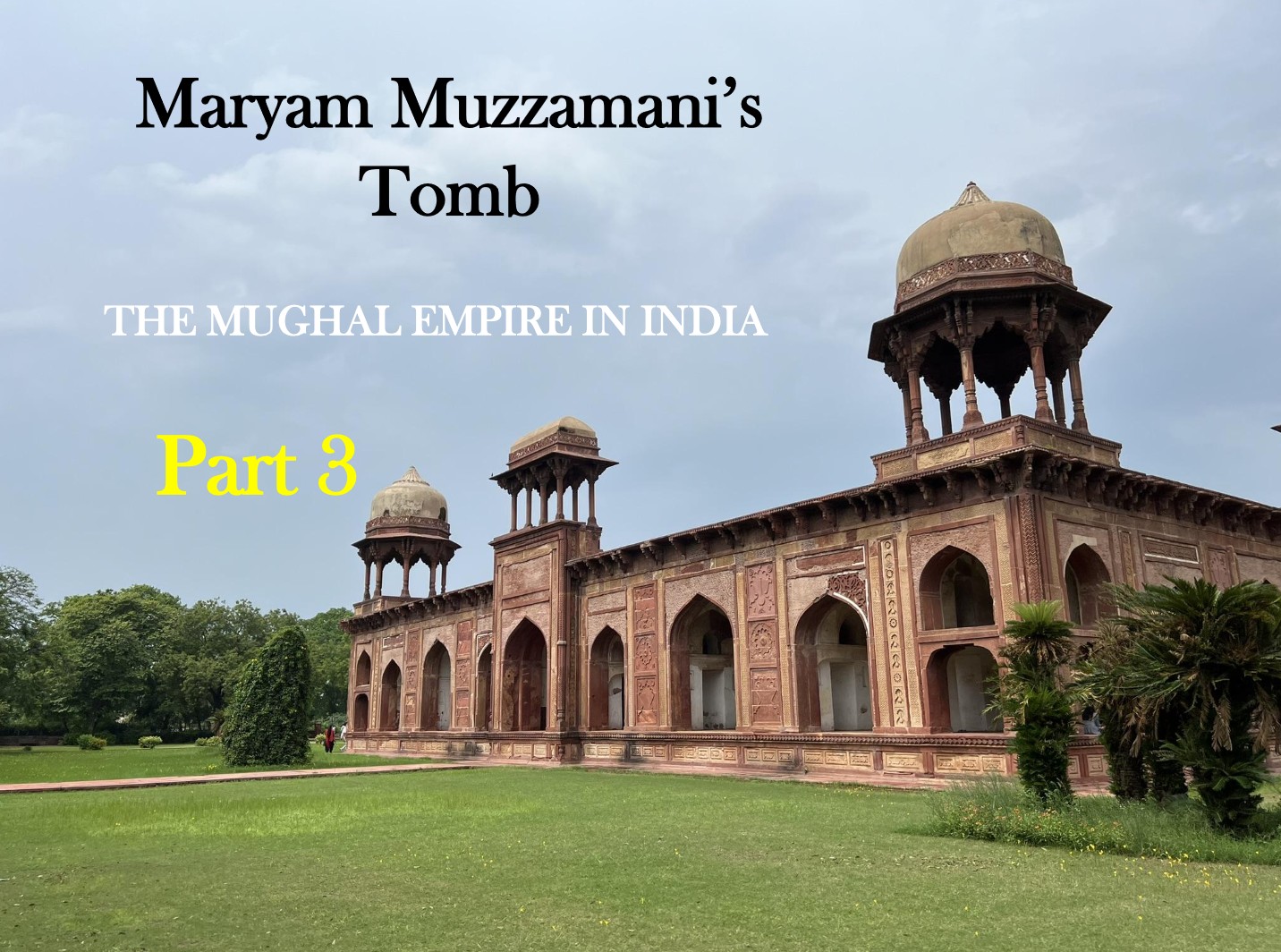
We’ve arrived at the stage of our Akbar-Maryam-Jodha saga, where Emperor Akbar has married his fourth and most significant wife, Maryam. Significant, because she gave birth, in 1569, to his first surviving son and heir, Prince Salim, who went on to become Emperor Jahangir. But, what of Jodha, also Akbar’s wife?
That most-beloved and favorite Hindu wife, was she Maryam? Or, was she another wife, so adored that Emperor Akbar neglected all his other wives for her? What of their grand, grand love story—what about all the movies made about her, the television series that star her?
More to the point, was there ever a Jodha Bai in Emperor Akbar’s life?
Continue Reading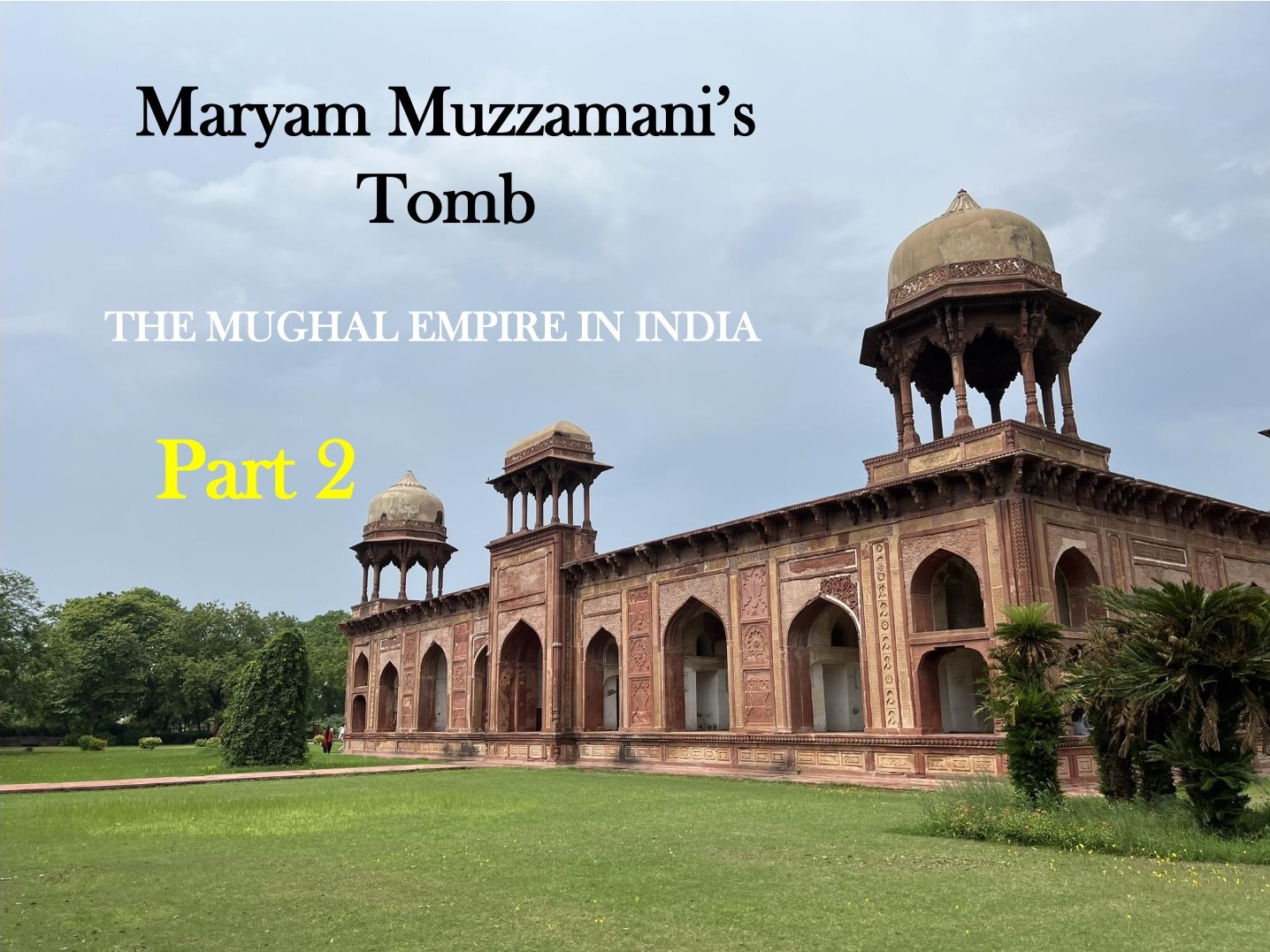
On the first part of this blog post, we tarried our way through the origins of the Mughal Empire until Emperor Akbar had married his first three wives. He’s now poised to make his fourth marriage with a Hindu princess—a first of many firsts, you’ll see why.
This empress, later given the title of Maryam Muzzamani, and bestowed with a tomb that we are going to visit, would give birth to the first of Akbar’s surviving sons—finally, an heir for Akbar’s empire.
Continue Reading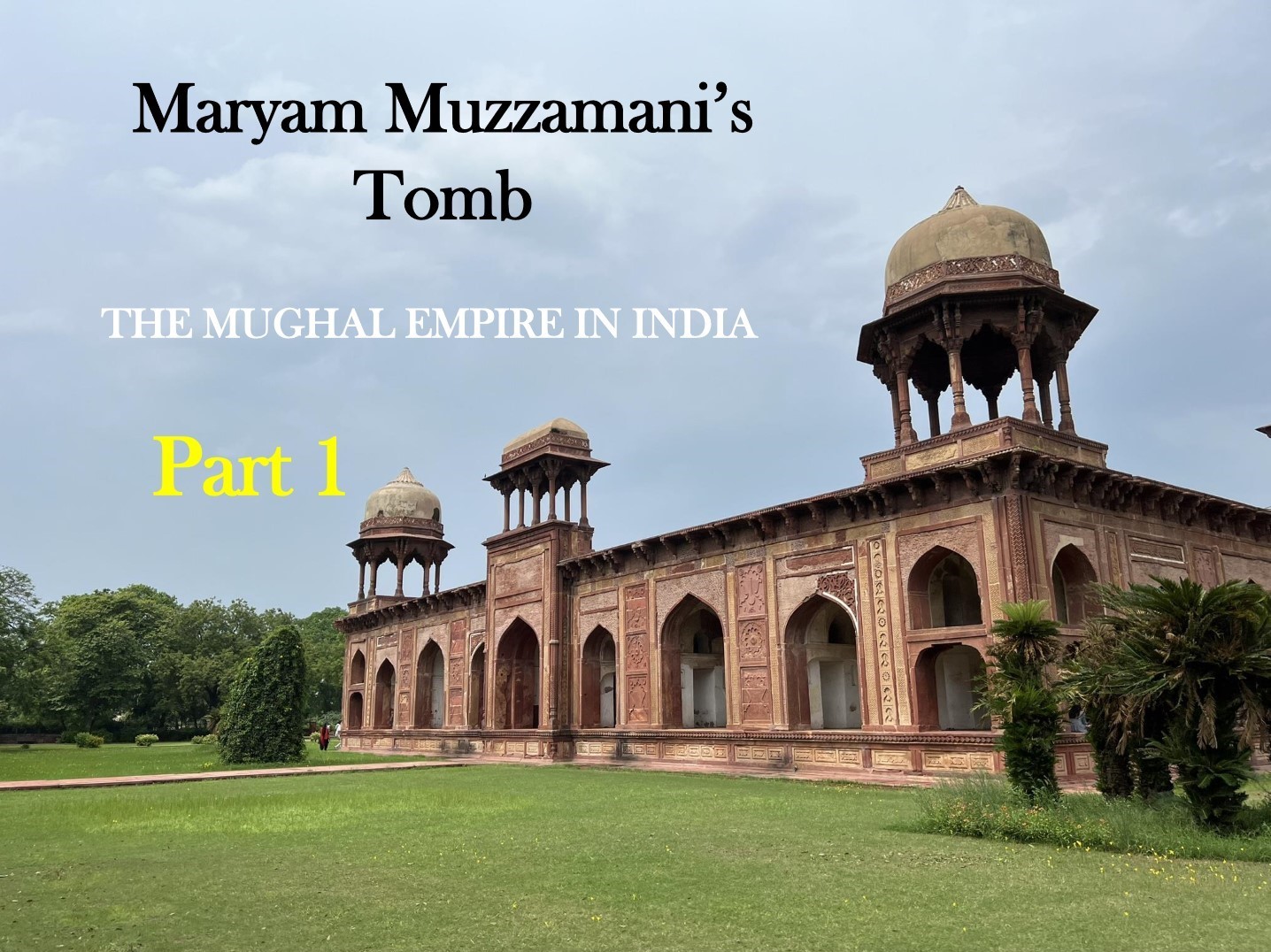
(Part 1 of 3)
On the night before we leave for Agra, I mention to our driver that we’d like to stop at the town prominent in the Mughal Empire, Sikandra.
Deepak gazes at me long and in silence.
I explain. You know, it’s on the road into Agra. Akbar ka rauza aur Maryam ka rauza. Gesticulating. Lamba chauda. Road se dikhega. Vo thai Padshah, aur Maryam unki bibi. (For those of you who don’t understand my, er, abbreviated Hindi: Akbar’s and Maryam’s tombs, imposing monument, can be seen from the road. He was emperor, and Maryam was his wife).
His expression does not change. But, I’m not disheartened. Deepak’s a man of few words.
Continue Reading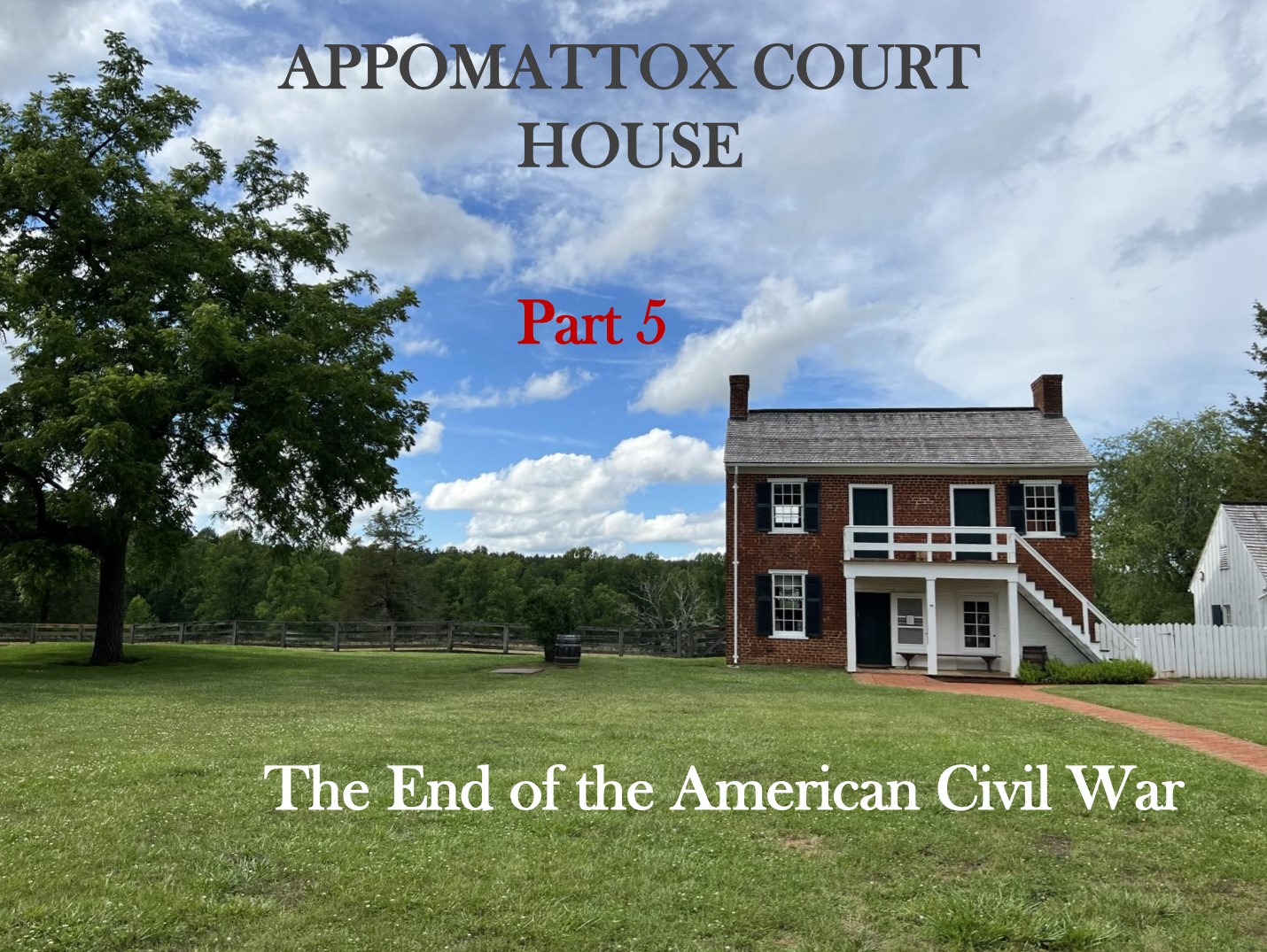
We went to the Appomattox Court House National Historic Park by pure chance last summer. It was a lucky set of circumstances—a long drive, sheer boredom, trolling through the map app on my phone, and a name that popped up that sounded. . .familiar.
Continue Reading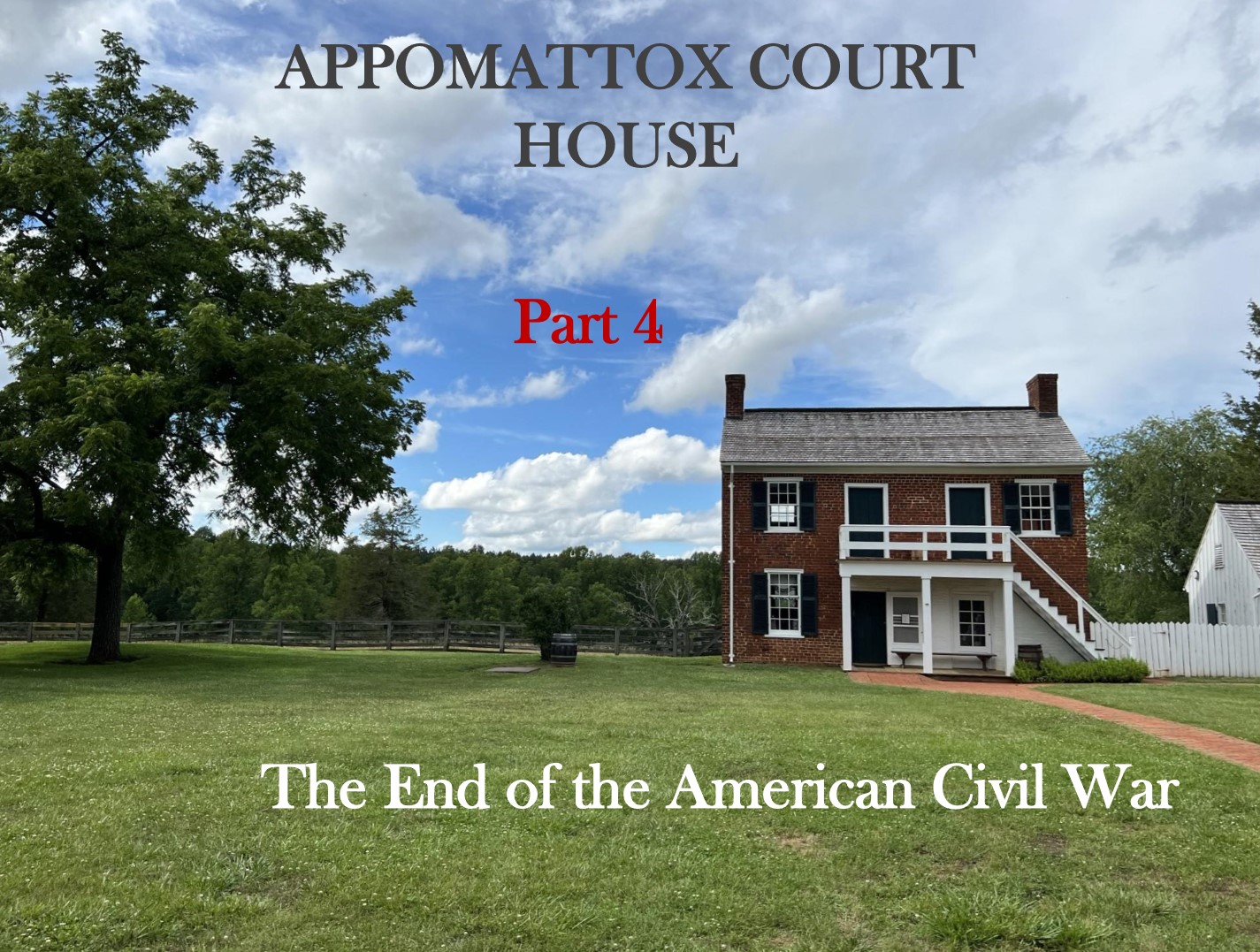
Almost from the moment that some Confederate states alienated themselves from the United States (after Lincoln was elected and before he was sworn in), it became clear that the American Civil War was imminent.
Also clear was the main directive for the Union Army—capture Richmond, the Confederate capital.
It was four years before that happened—four years, far too many lives lost, battles fought, and four chief commanding generals appointed in the Union Army. The man who ended the American Civil War, Ulysses S. Grant, was the last, and he accepted his commission from President Lincoln in April of 1864.
Continue Reading