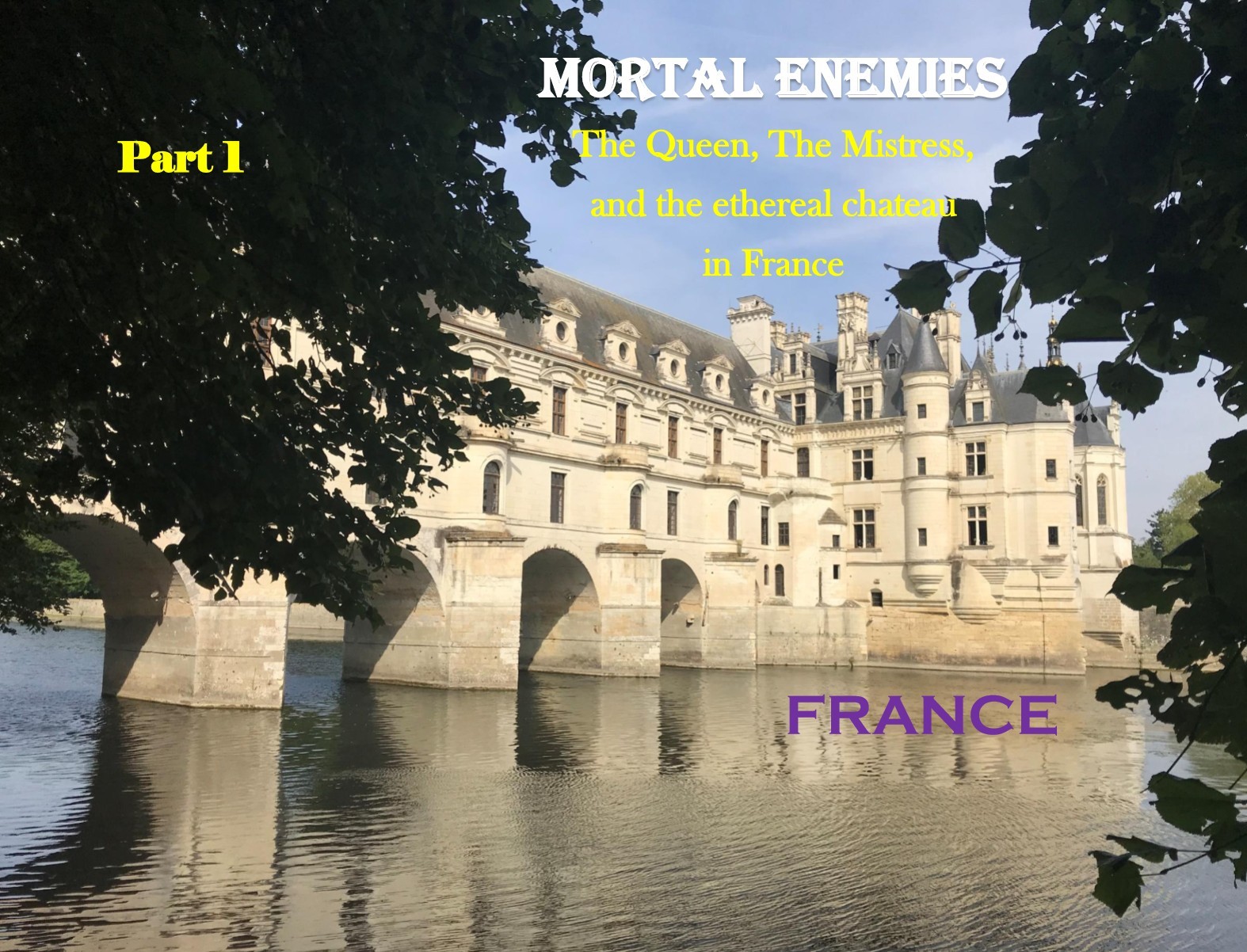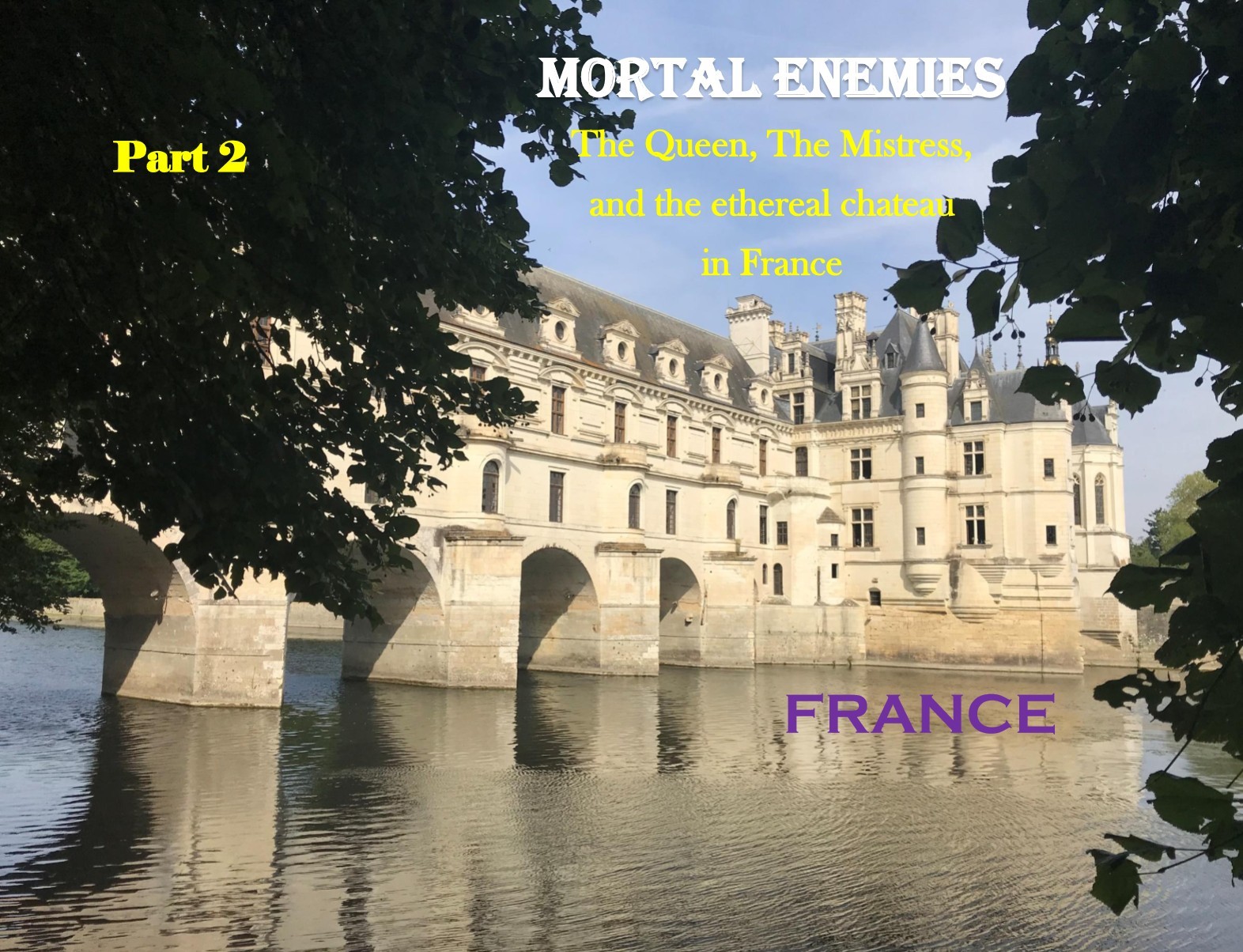
Featured image for Part 1 of the blog post on the Chateau de Chenonceau

Mortal Enemies: The Queen, the Mistress, and the ethereal chateau in France–Part 1

(Part 1 of 4)

THE MAN BETWEEN THE TWO WOMEN: KING HENRY II OF FRANCE

Twilight lingered over the little clearing in the woods around the River Cher, before bowing out to an ink-smudged night. A veil of stars, softly aglitter, settled over the Château de Chenonceau.

Boats, with two and three people, peeled away from the dock. In each, the oarsman was a courtier in his doublet and hose, a sprightly heron’s feather in his velvet hat.  The women’s gowns—trimmed with satin—rustled as they shifted in their seats, their necks gleaming pale in low-cut, form-fitting bodices.  Here and there, diamonds sparkled on a slender throat and light hands flashed with jewels as they trailed their fingers in the placid waters of the Cher.

Continue Reading
Part 3 of Jane Austen in Chawton Cottage

At Home at Last: Jane Austen in Chawton Cottage—Part 3

(Part 1 here; Part 2 here)

Jane, her sister Cassandra, and their mother moved into Chawton Cottage in 1809, thanks to her brother Edward Knight’s generosity.  One other person came to live with them.  Martha Lloyd was a longtime friend, and a few of Jane’s surviving letters are written to her.  She was the sister of Jane’s oldest brother James’ second wife, Mary.  Got all that?  (James took over the rectory at Steventon when their father retired; his son by his second wife, James Edward Austen Leigh, is the one who wrote Jane Austen’s first official biography.  So both Martha and Jane were aunts to James Edward Austen Leigh). Continue Reading

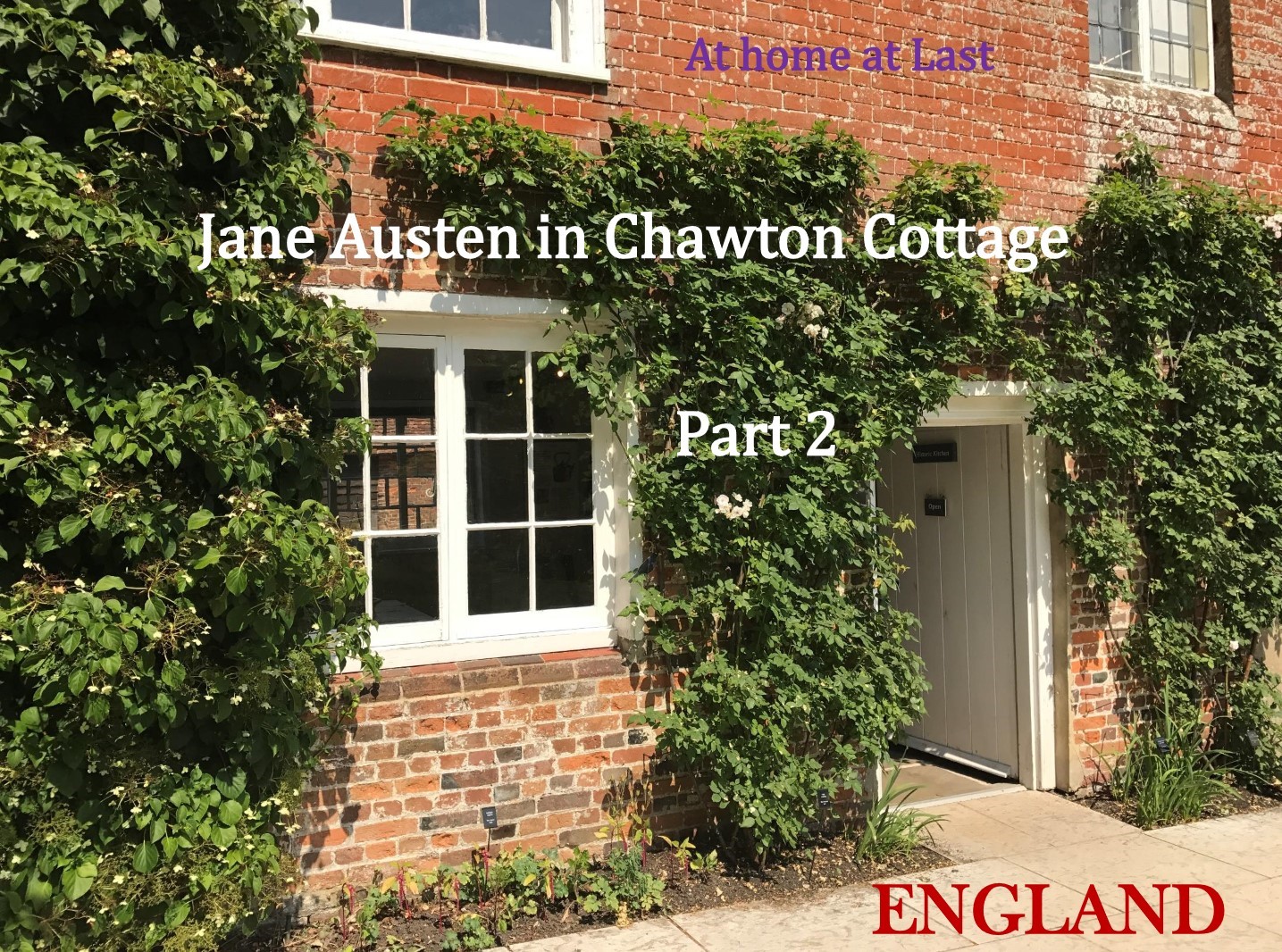
Part 2 of the blog post on Jane Austen in Chawton Cottage

At Home at Last: Jane Austen in Chawton Cottage—Part 2

(Part 1 here)

 The front of Chawton Cottage, where Jane Austen spent the last eight years of her life.  Source:  Jane Austen: Her Homes & Her Friends, by Constance Hill.

How Edward Austen became Edward Knight:  Austen’s Emma begins with a marriage between Emma’s governess, Miss Taylor and Mr. Weston, with Emma bemoaning the fact that her companion had now disappeared—moving a whole half mile away to her own house, her own husband, her own occupations.  ‘…Emma was aware that great must be the difference between Mrs. Weston only half-a-mile from them, and a Miss Taylor in the house Continue Reading

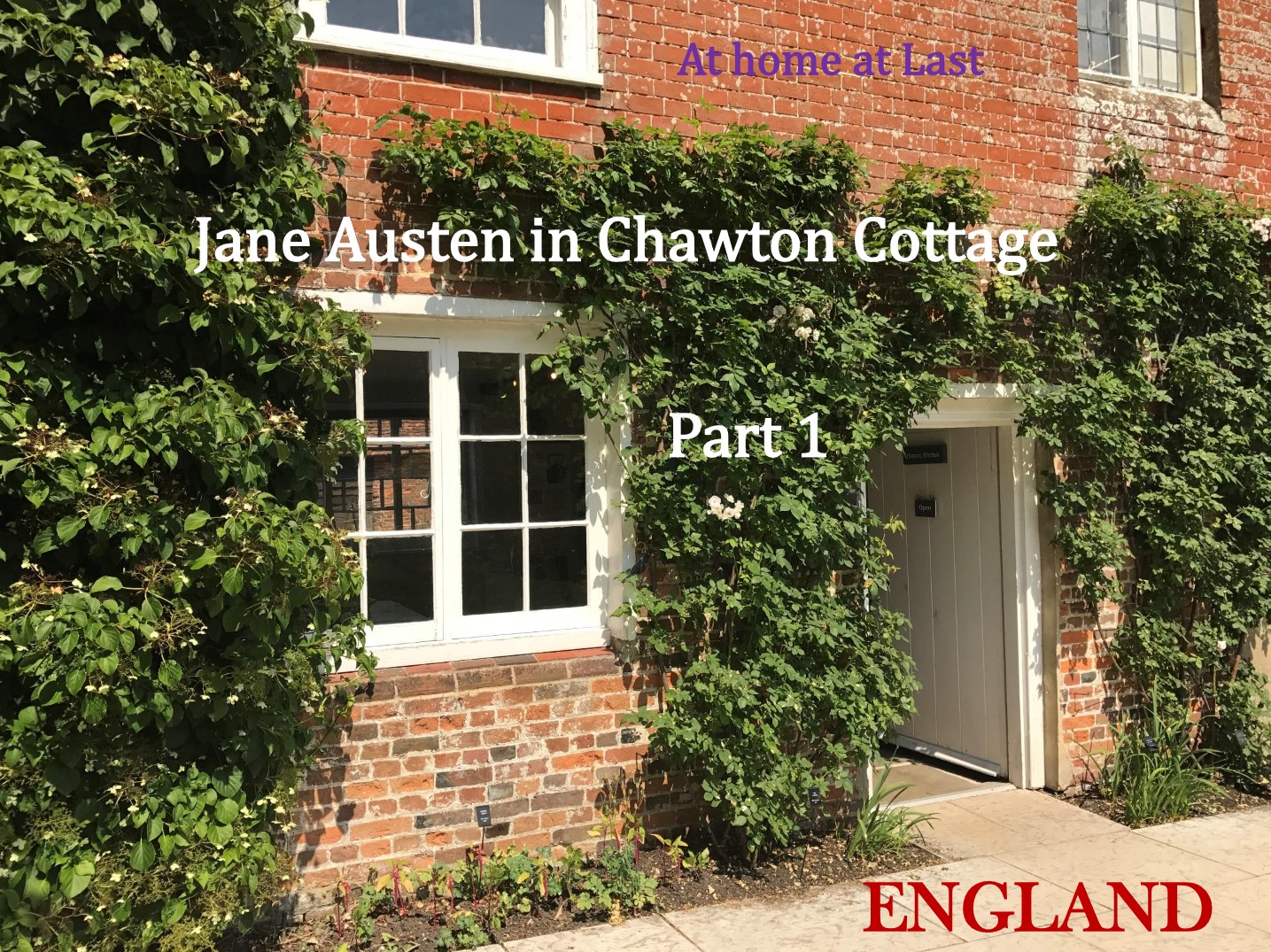
Part 1 of the blog post on Jane Austen in Chawton Cottage

At Home at Last—Jane Austen in Chawton Cottage—Part 1

The Bath years, the writing falters, but the research doesn’t

George Austen had had it by 1801.  He had been rector of two parishes, Steventon and Deane, for thirty-seven years.  He had conducted two, maybe three services a week at the two churches.  He had visited the poor, the sick, administered last rites to the dying, and buried them in the churchyards.  He had home-tutored pupils who had lived in his house year-round to prepare for the university.  His wife had to be their de facto mother, and she had fed them, washed their linens, and tended to their fever and chills.  All this, to make extra money to supplement George Austen’s income.  Now, his children were grown up, some were married (Jane and her sister Cassandra were not, and were still at home), he was old(er) and in poor health, and he wanted to live the rest of his life out in a relative peace. Continue Reading

Part 1 of the blog post on Jane Austen, Steventon and the Church of St. Nicholas

Not Northanger Abbey: Jane Austen, Steventon, and the Church of St. Nicholas—Part 1


I’m in a churn of delight when I glance at the GPS and see that the Church of St. Nicholas is not more than a half mile away from the turning.  Like the best of anticipations, I can’t see the church as we drive along the road, only trees that clot the roadside and arc their branches over, letting little tatters of sunlight through.  It’s a slim, country road, a one-laner.  Eventually, we hit the end of the road, and the church raises its steeple on the left in a miniscule churchyard.  Birds coo and chirp, bees hum in the sunshine; there’s one other car in the parking lot, whose occupants leave almost as soon as we get there. Continue Reading

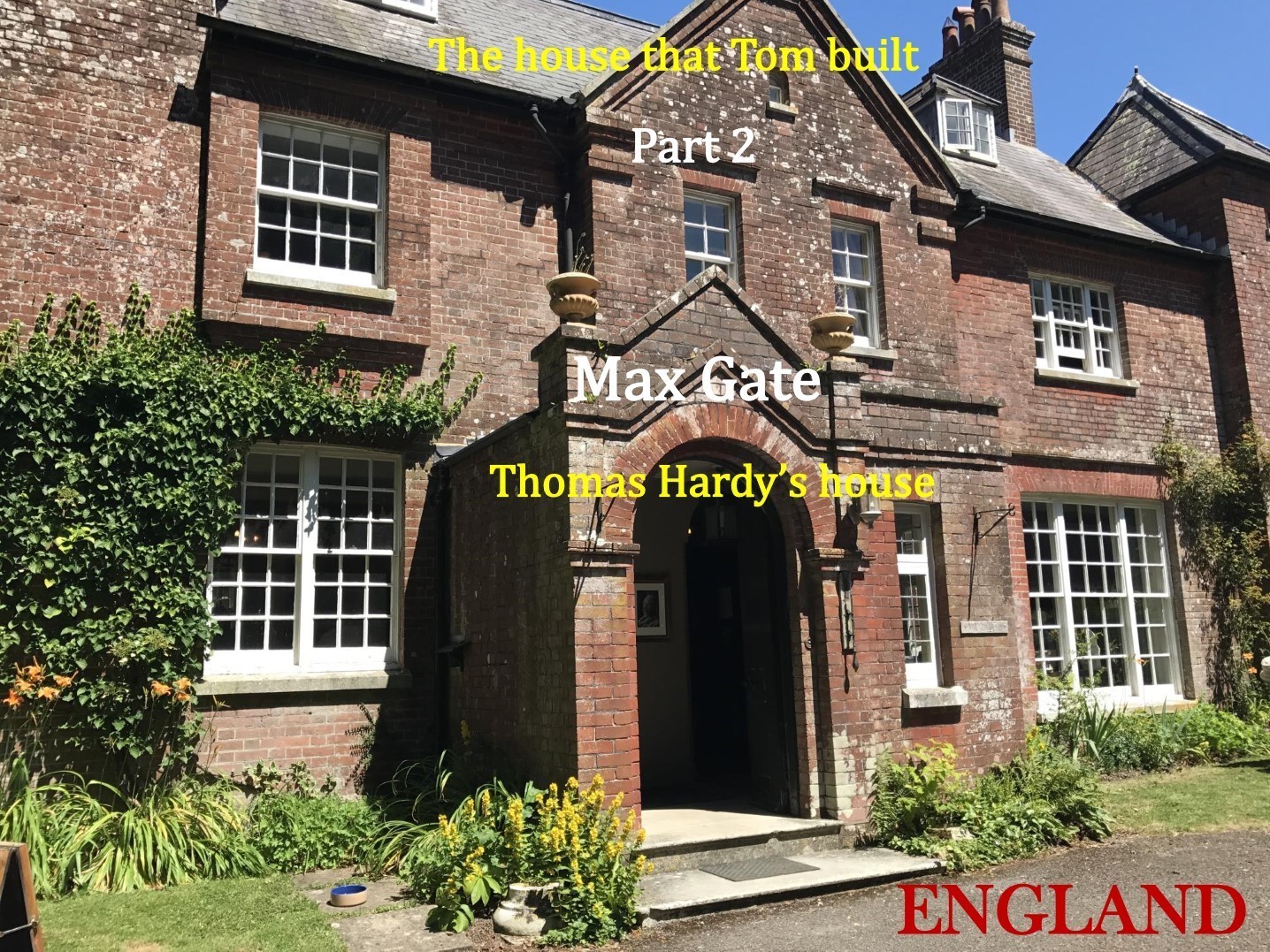
Part 2 of the blog post on Thomas Hardy's house in England, Max Gate.

Max Gate: The house that Tom built—Part 2

(Part 1 here)


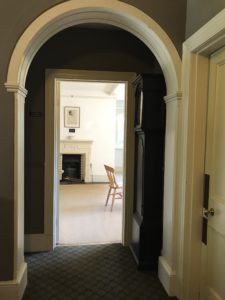
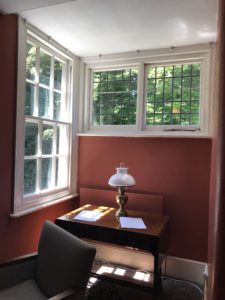
A Space to Write: To any writer, perhaps the most important room in the house is the place to write. Hardy had three. In his original plan for the house, the ‘two up, two down,’ his first study was one of the ‘two up’ rooms upstairs, over the drawing room.

Left, Hardy’s First Study, above the drawing room.  Right, Hardy’s Second Study, originally the guest bedroom.

At that time, even though the house was called a ‘two up, two down,’ there was a small guest bedroom behind the master bedroom which was over the original small kitchen on the ground floor. This later became his second study. Continue Reading

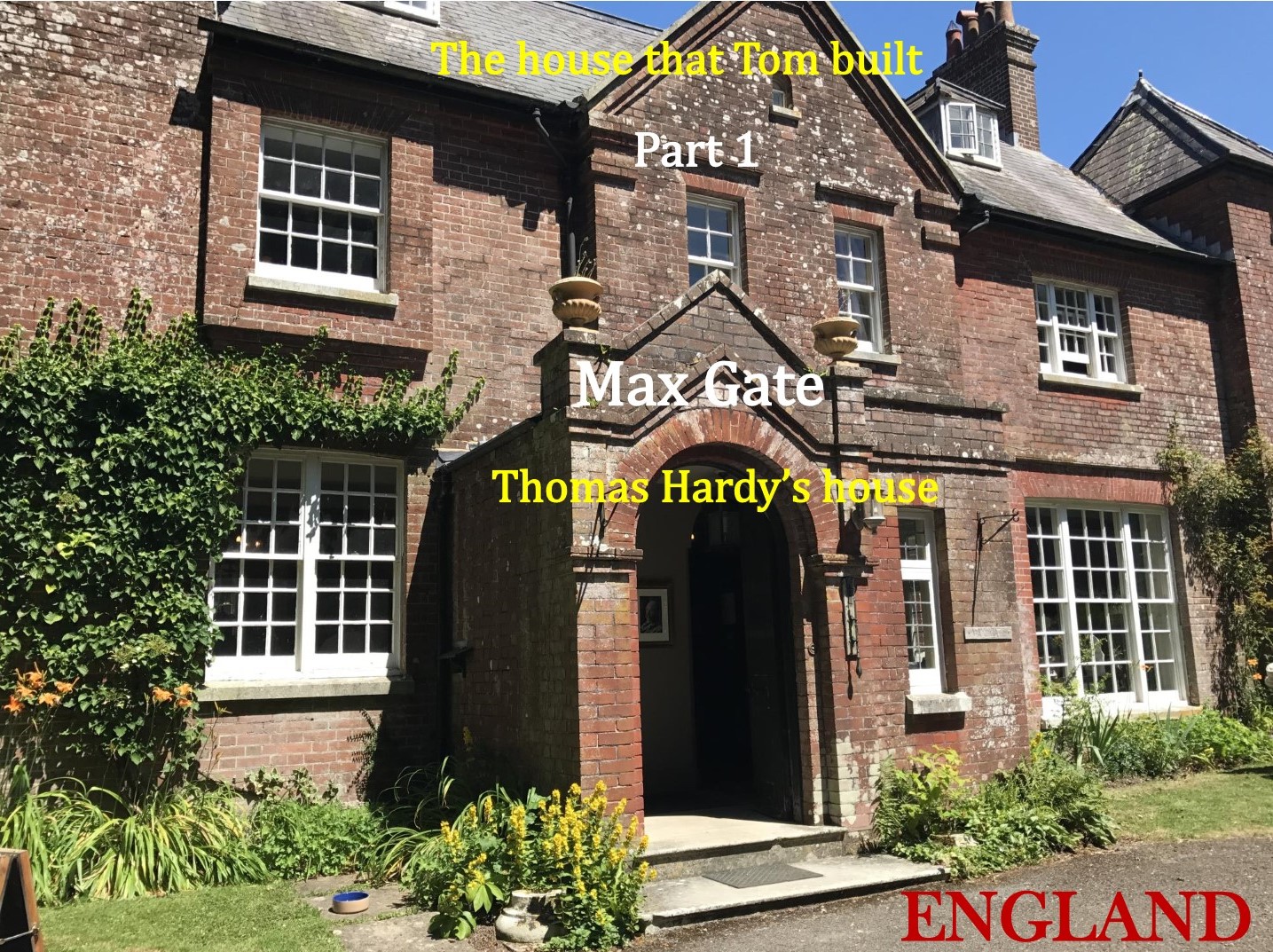
Part 1 of the blog post on Thomas Hardy's house in England, Max Gate.

Max Gate: The house that Tom built—Part 1

Which Thomas Hardy?  Search for ‘Thomas Hardy’ and—apart from our book-related Hardy—two other very interesting results also show up.  One is about the trial of a Thomas Hardy for high treason, and the other about an altarpiece—a reredos—discovered behind the wooden altar in All Saints Church, Windsor, and attributed to a Thomas Hardy.

Thomas Hardy’s reredos in All Saints Church in Windsor. Continue Reading