The featured image for Part 3 of the post on the Bayeux Tapestry.

All Hail William, The New King–The Unsurpassed Bayeux Tapestry–Part 3

THE BAYEUX TAPESTRY, THE SCENES, EXPLAINED.

When William, the French Duke of Normandy, went across the English Channel in September, 1066 CE, to take England and make it his own, he gave two excuses for this unreasonable aggression.

One, he said that King Edward the Confessor, who was his uncle once removed (see the history in Parts 1 and 2 of this blog post), had, during William’s first and only visit to England some fifteen years earlier, declared that he wanted William to follow him  on the throne.

The first scene of the Bayeux Tapestry shows Edward the Confessor, giving Harold, Duke of Wessex, permission to go to France.

The very first scene of the Bayeux Tapestry—detailing William’s conquest of England—is a meeting, presumably at the Palace of Westminster which was the royal abode then, between Edward the Confessor and his successor, Harold.  Harold was Edward’s brother-in-law—Edward had married his sister. Image Source.

Two, William said that the man who donned the crown after Edward the Confessor’s death in January of 1066 and became King Harold, had also promised him (promised William that is) that he would absolutely not take the crown after Edward, and that it would be kept for William.

I can, and will, poke several holes into both these excuses.

Continue Reading
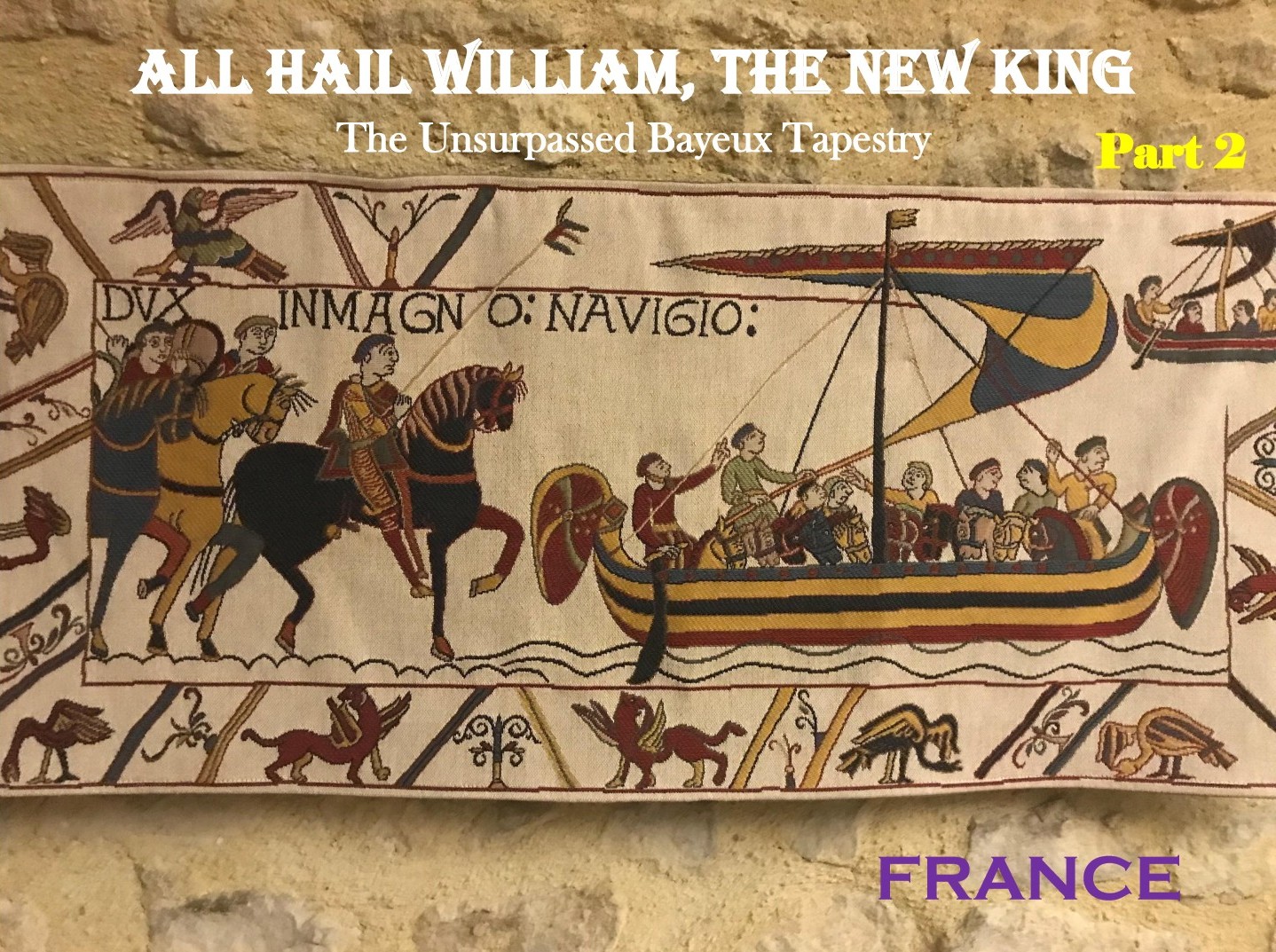

Part 2 of the blog post titled All Hail William, the New King. The unsurpassed Bayeux Tapestry.

All Hail William, the New King–The Unsurpassed Bayeux Tapestry–Part 2

In 1066 CE, a French usurper, William the Conqueror, came to the English throne.  He was the Duke of Normandy, and his story was told very soon after The Conquest on a length of embroidered linen, using ten hues of subdued colors.  This is the Bayeux Tapestry.

The tapestry was made for the consecration of Bayeux Cathedral—William the Conqueror’s brother, Odo, was Bishop of Bayeux, and responsible of the building of the cathedral (future blog post).  At that grand event, the Bayeux Tapestry was displayed for the first time, and for many centuries after, hung in the grand nave.

Continue Reading
The Norman Conquest and the Bayeux Tapestry--Part 1

All Hail William, the New King–The Unsurpassed Bayeux Tapestry–Part 1

At the end of September, 1066 CE, William, Duke of Normandy, took a boat across the English Channel to land on the coast of Sussex. A little more than a fortnight later, he had defeated the English king, and established himself sovereign in a Norman Conquest.

So complete was William’s victory that the very character of English society altered beyond recognition. Language, law and politics knelt to Norman rule.  The English nobility fled the country in large numbers, or died during the invasion, and their daughters, sisters, and wives who inherited their estates, married William’s French nobility. Most of the high offices in the land—both the laity and the clergy, including the Archbishop of Canterbury—went to the French.

Continue Reading
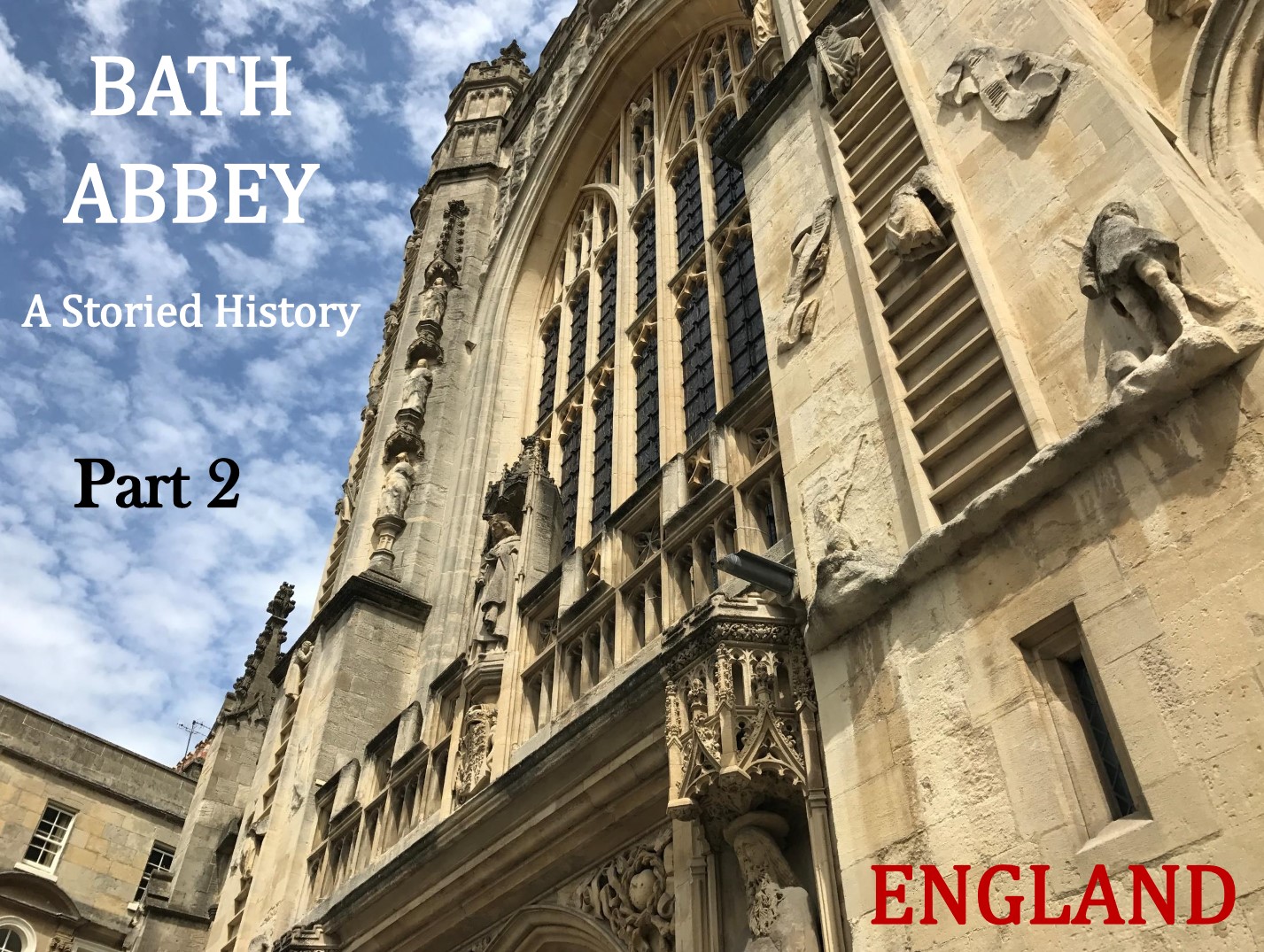
Part 2 of the blog post on Bath Abbey in England.

Bath Abbey–A Storied History–Part 2

Part 1 here

My kingdom for a wife (and an heir):

In the early 16th Century, Bath Abbey and England had a new king, desperate for an heir, married to a woman who could not give him a son.

Henry VIII, who had not expected the throne, was a carousing, hard-living man, tilting in yards, hunting, drinking and eating until late hours. And, he had a roving eye. Eventually, he decided that the first wife would not do, and to divorce her, he toppled the entire religious establishment in England.

Ultimately, Henry would have six wives, with a ditty to immortalize their fates: ‘Died, beheaded, died. Died, beheaded, alive.’

Continue Reading
Part 1 of the blog post on Bath Abbey in England.

Bath Abbey–A Storied History–Part 1

Economics at Bath:

What, you might ask, does the church of Bath Abbey have to do with the study of economics? Follow me here for a bit, please.

Take an Economics 101 class, and you will learn that Adam Smith is the ‘father’ of modern economics.  If Smith’s the father, then Thomas Malthus, with his theory on food production and population growth, is surely the ‘son’ of.  I’m muddling around here a bit, but what I mean to say is that both Smith and Malthus were hugely influential in their economic philosophies. 

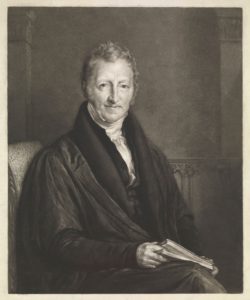
The economist, Thomas Malthus, is buried at Bath Abbey
Thomas Robert Malthus. Source.

I write fiction now, but I do have three degrees in economics, and when I heard that Thomas Malthus was buried at Bath Abbey, I had to go pay my respects at his memorial. 

Malthus’ theory of population explosion is simple and reasonable enough.  If food production grows, then it doesn’t necessarily, over time, lead to a better standard of living, because the population growth will eventually eat up all the food surplus.

Continue Reading
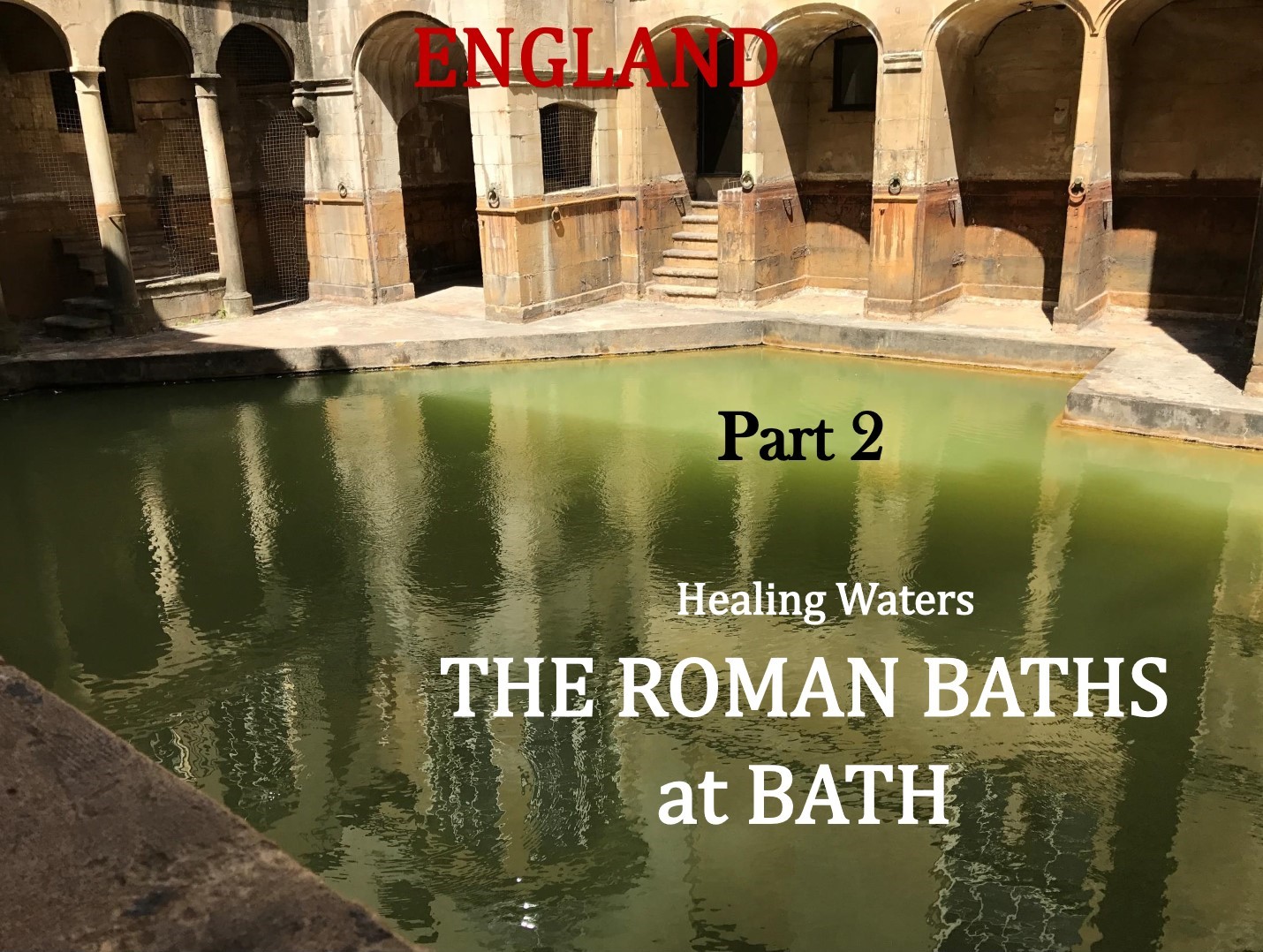
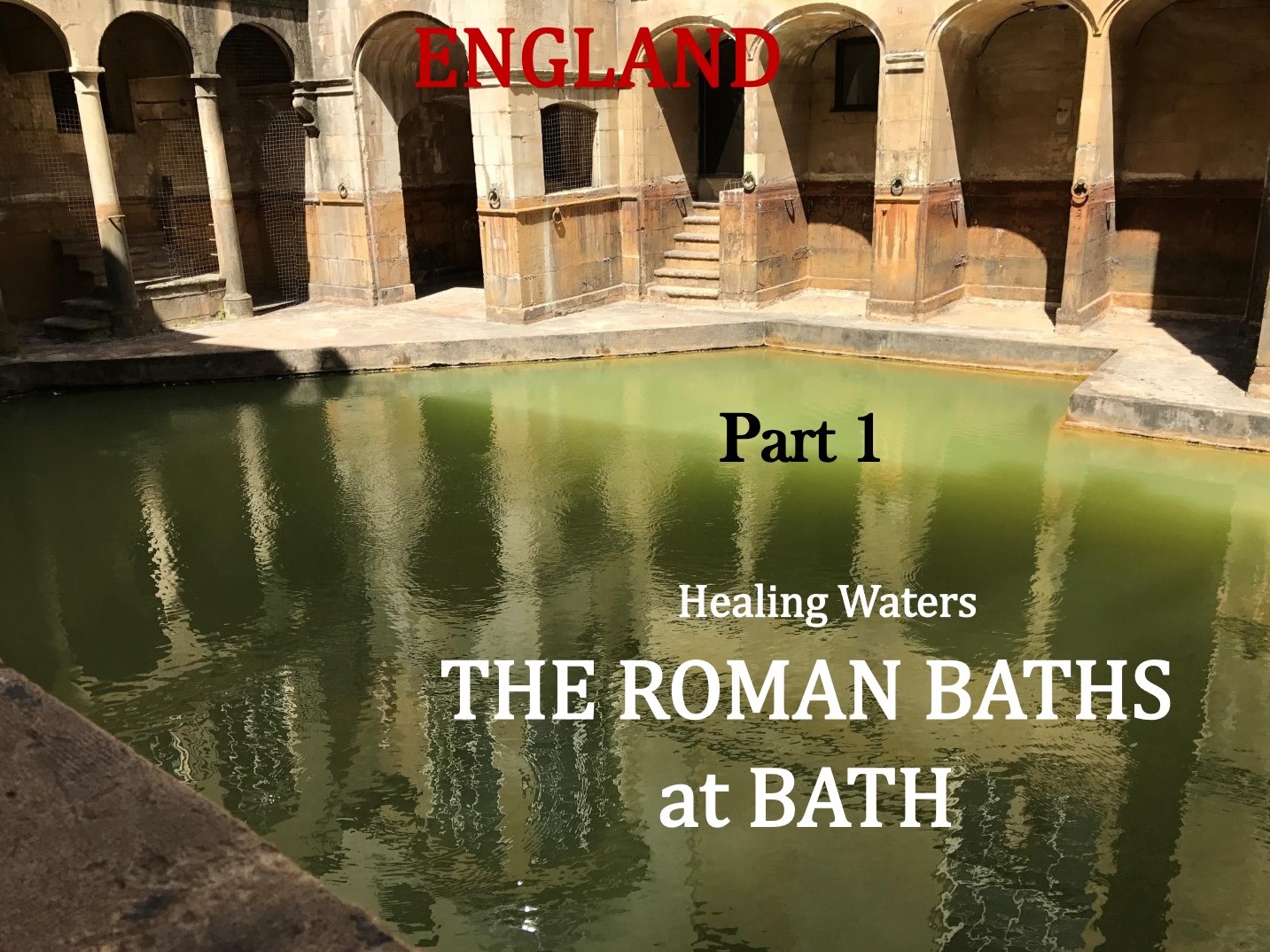
Part 2 of the blog post on the Roman Baths in England.

The Roman Baths at Bath–Healing Waters—Part 2

The Roman Baths that were:

The Roman Baths today don’t any longer function as usable baths.  Waters are still pumped through ancient lead pipes into the bath, but they’re green with algae (pretty, actually!)–a sign that it’s not a good idea to try drinking it, or even trailing your fingers through it.

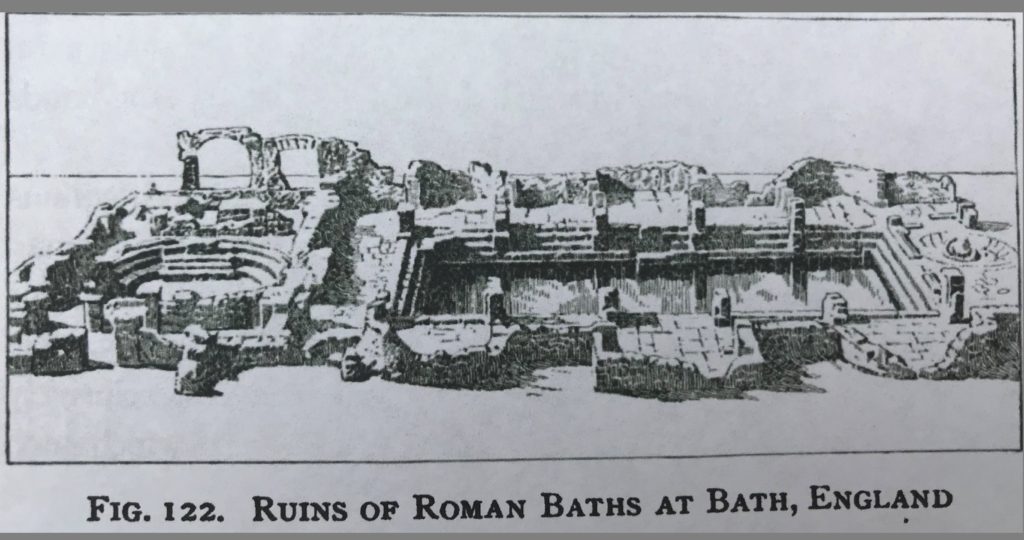
Early excavations unearthed the Great Bath (right) and the circular Cold Water Pool (left).
Source: Outlines of European History by James Henry Breasted. 1914.
Continue Reading
Part 1 of the blog post on the Roman Baths in England.

The Roman Baths at Bath–Healing Waters—Part 1

But…not all the credit goes to the Romans, surely:

Before the Romans came to England and built the Roman Baths at Bath, there was good king Lud Hudibras. He ruled over England sometime in the 7th or 8th Century BCE, and had both a great sorrow and a terrible dilemma.  His son had leprosy, a devastating disease, with no cure in the times in which he lived.  Otherwise, this boy, Bladud, was a fine, stalwart young man, engaging of manner, fine of face and form, a splendid heir to a vast kingdom.

But, Bladud could not live at the English court anymore.  Over time, this dreaded illness would eat away at his extremities, turning his hands and feet into stumps, causing everyone to recoil from him in disgust. What sort of a future king would Bladud make?

Continue Reading
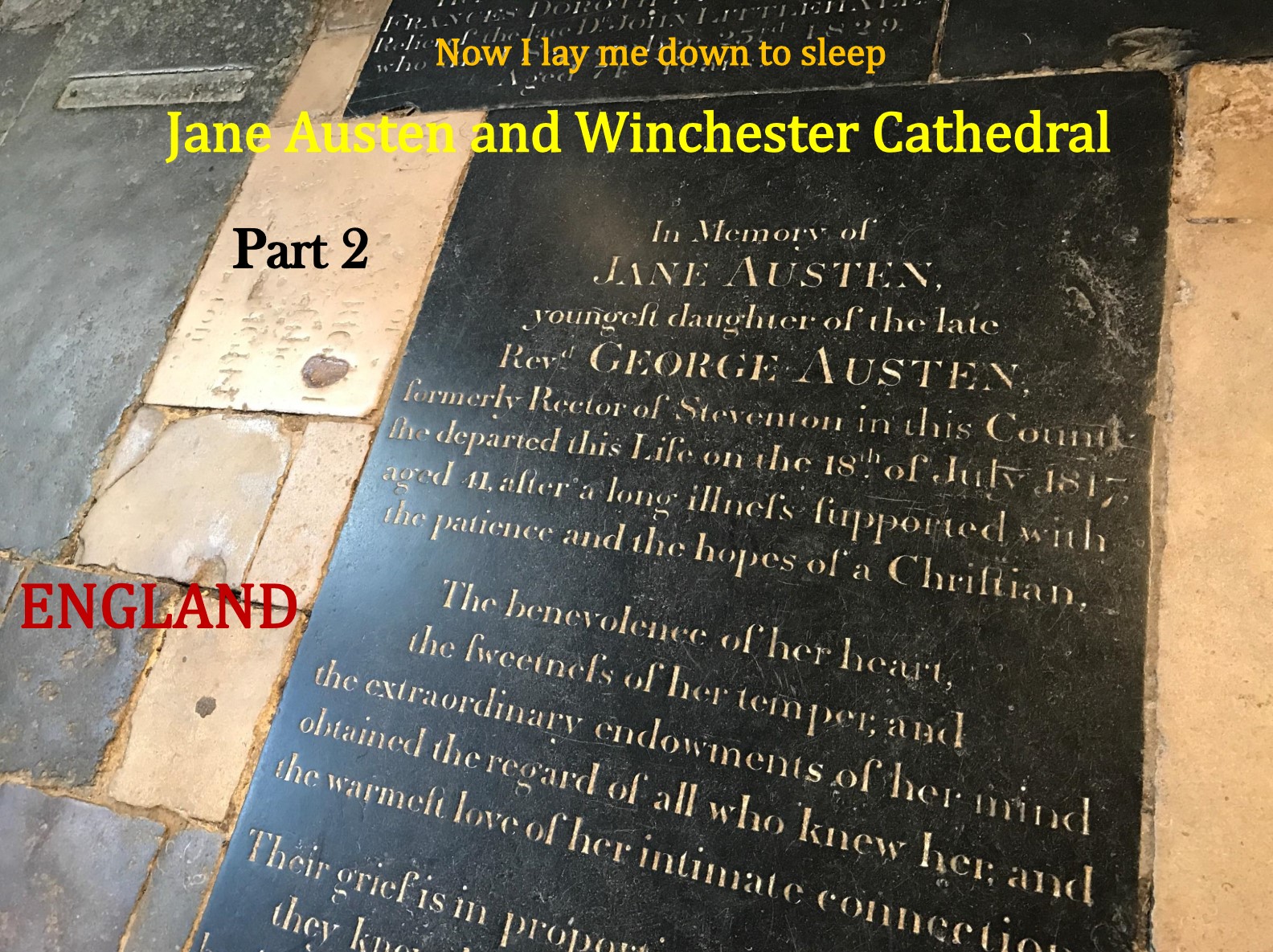
Part 2 of the blog post on Jane Austen and Winchester Cathedral.

Now I lay me down to sleep—Jane Austen and Winchester Cathedral—Part 2

We last left Jane Austen at Chawton Cottage, Part 1, Part 2 and Part 3.  Jane’s most productive writing periods were pre-Bath (before 1801) and after the move to Chawton in 1809.  The first produced Pride and Prejudice, Sense and Sensibility and Northanger Abbey.  During the second, she wrote Mansfield Park, Emma and Persuasion. She also began publishing in this Chawton period, beginning with Sense and Sensibility first.

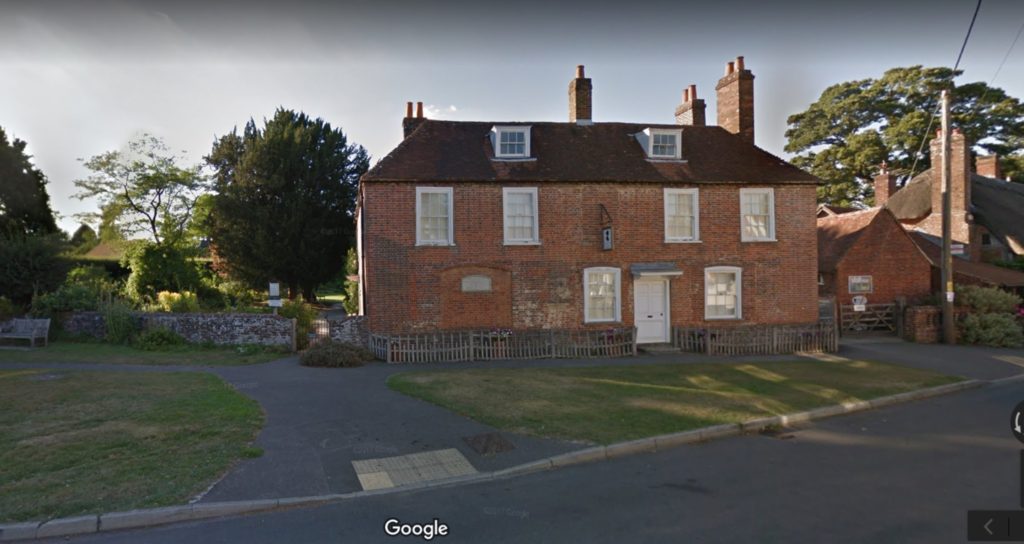
Chawton Cottage was the hub of comfort for the extended Austen family.  Here, was Mrs. Austen, the mother of Jane and her siblings and grandmother to their children, and the two beloved maiden aunts, Jane and Cassandra.  And, the nieces and nephews came to stay, sometimes for a vacation, sometimes for longer when there was a death in the family and they needed a place to be and someone to cheer them up.

Chawton Cottage, where Jane Austen lived from 1809 until her death in 1817.
Source: Google Street View
Continue Reading
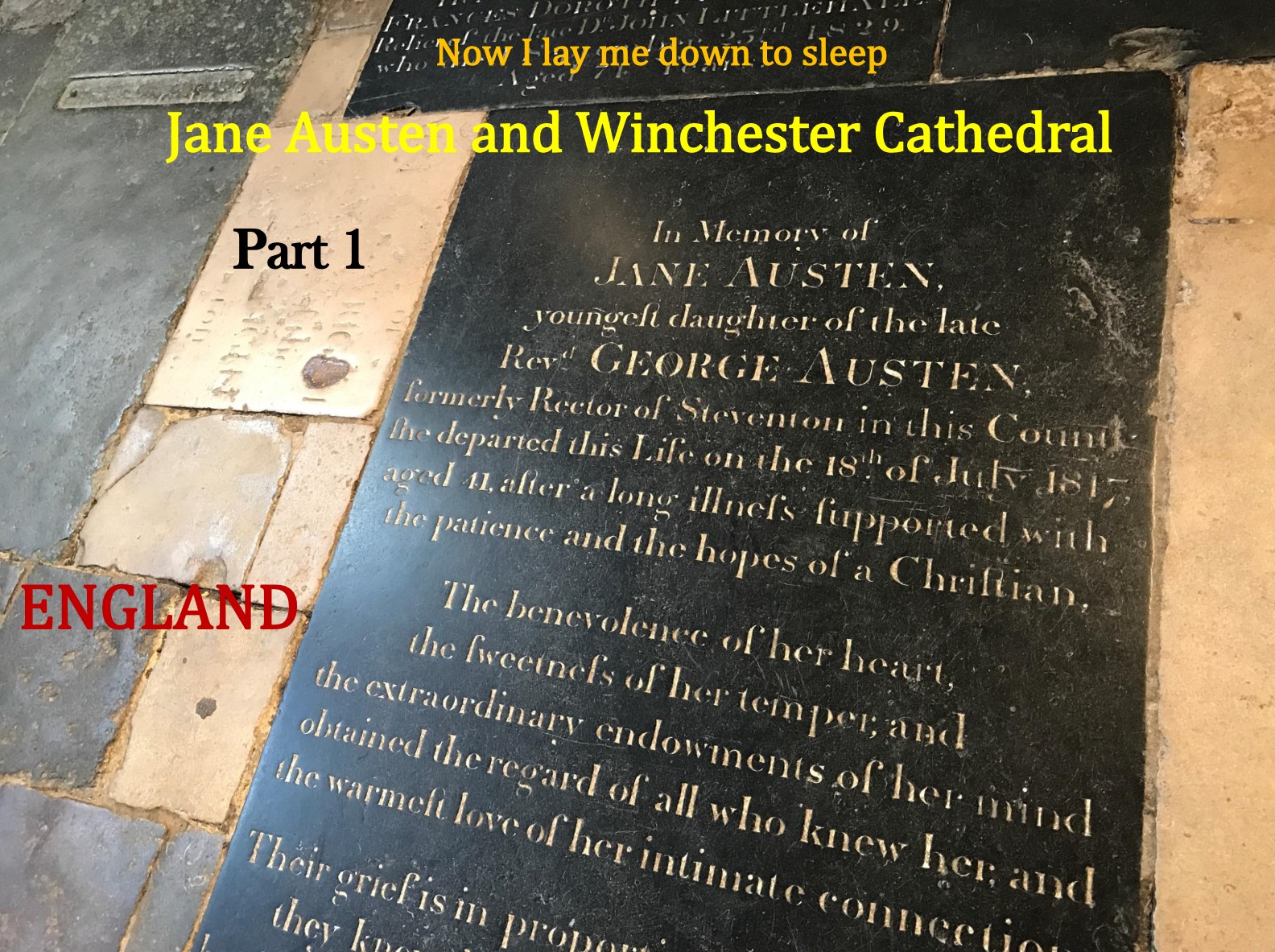
Part 1 of the blog post on Jane Austen and Winchester Cathedral.

Now I lay me down to sleep—Jane Austen and Winchester Cathedral—Part 1

We blew into Winchester Cathedral at the end of a very long day, and I use that verb advisedly.  We had spent the morning and afternoon in Austen country—Steventon where she grew up, and the St. Nicholas Parish Church (Part 1 and Part 2 on the blog) and Chawton Cottage (Part 1, Part 2 and Part 3) where I wandered around for far too long.  So, by the time we got to Winchester Cathedral, there was, it seemed, just a teacup full of time left before the church closed for the day.

But, stepping inside was into a sea of calm.  I paid my respects at the grave, and still had time to walk around the cathedral, breathe the air, and dwell on its history.  And while Jane Austen is arguably its most important occupant, Winchester Cathedral was there for many centuries before her, and its mellow stones are steeped in legend…and some myth.  Read on.

Continue Reading
Book Review of Wuthering Heights by Emily Bronte

Book Review—Wuthering Heights by Emily Brontë

The average life expectancy in the mid-1800s, in North Yorkshire, was about 25.6 years.  By the time the novel opens, sure enough, most of the characters have gone to their graves, and only the dark, brooding, heathen-ish Heathcliff remains.  He’s been made much of (as a hero) over the centuries since Wuthering Heights was first published, but really, he’s not a man you want around.  Anytime.  Continue Reading